What is the right system for your energy goals?
You’ve made the smart decision to switch to solar and protect yourself from rising energy costs. The decision to install solar panels may be easy, but choosing the type of solar system that fits your needs requires experience. Our NABCEP-certified System Designers will take into account factors such as location, energy usage, future energy costs, roof design, budget, and the goals of the system to custom-build a solar electric system that is tailored to your home’s specific needs.
Categories of solar electric systems
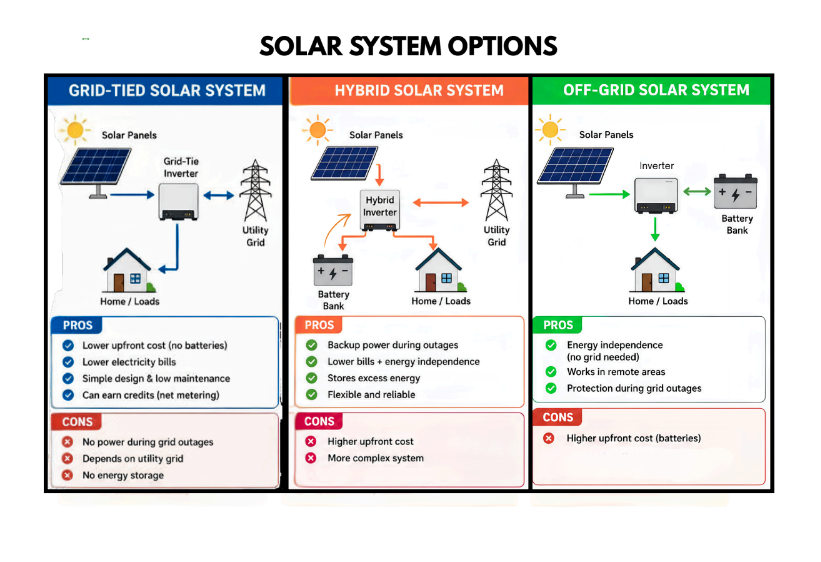
Grid-tied Solar
→
Grid-tied Solar
Grid-tied solar is the least expensive and quickest system per kW to design and install to meet your energy needs. You will get a quicker return on investment with this type of system.
With a grid-tied system, you will be connected to a net-meter that allows you to build a bank of energy credits when the sun is shining on your panels. You use these credits when the system is not producing at night or when production is less during inclement weather.
Grid-tied solar will not provide your home with energy during a grid outage. When grid power shuts off, the inverter will stop providing energy, even when the sun is shining.
Hybrid Systems
→
Hybrid Systems
Hybrid Systems are Grid-Tied Systems With Battery Backup. The system is hooked up to the grid, but the addition of the battery bank allows the system to provide energy to the home during a grid failure. We can back up every circuit in the home (whole-home backup) or only essential circuits like your refrigerator, well pump, heating source, internet router, lighting, etc. (partial home backup).
Colorado has a State Tax Credit for 10% of the material and shipping costs for the energy storage equipment of your system.
Off-grid Systems
→
Off-grid Systems
An off-grid solar system is a solar power system that operates without the support of the local utility grid. Instead, it relies on batteries to store electricity for later use. Off-grid solar systems generate electricity using solar panels and charge the batteries using a charge controller. The inverter then converts the electricity to power the household or a larger-scale infrastructure.These systems serve clients who want energy independence from the grid or clients who don’t already have grid power to their property.